พรสวรรค์ โภชนา — Ponsvan Kitchen
ไทย Daily 05:00–14:0005:00–14:00

Ponsvan Kitchen · Bueng Sam Phan · Phetchabun · Thailand

พรสวรรค์ โภชนา — แก่นแท้ แกงไทย (Ponsvan Kitchen — the essence of Thai curry)

Thai curries, ladled over rice, from five in the morning.

Ponsvan Kitchen is a small khao gaeng house opposite the morning market in Bueng Sam Phan, in the south of Phetchabun province. A row of trays cooked at dawn, a plate of rice, and the way Thais have eaten before work for generations. You point; we ladle.

Every day05:00–14:00· from ฿45

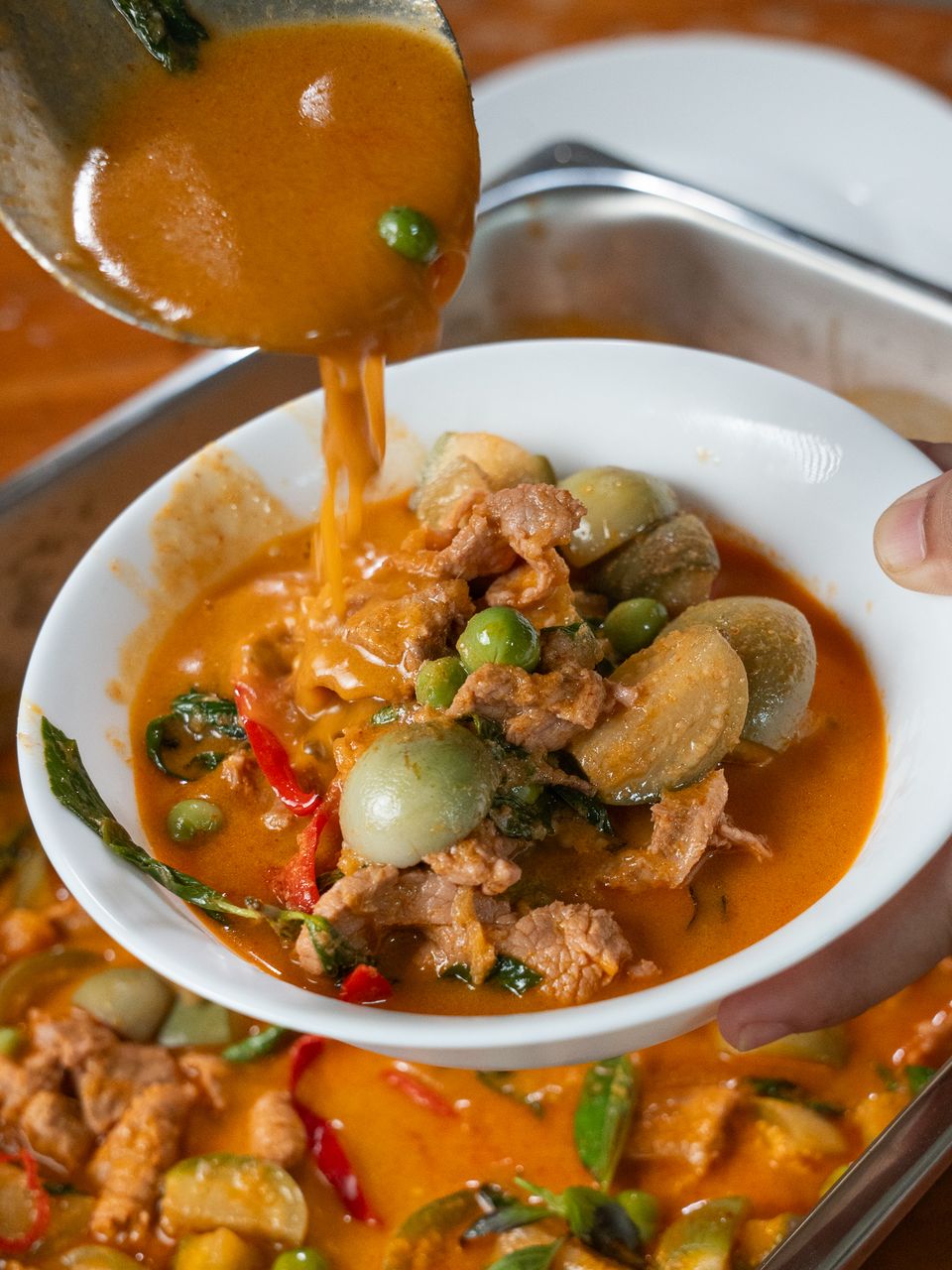
A ladle pouring curry over a plate of rice at the Ponsvan Kitchen counter
Curry from the tray, ladled straight over rice.
  • 05:00–14:00Every day
  • From ฿45Rice + one dish
  • Point to orderNo Thai needed
  • Cash · PromptPayNo cards
  • Opposite the marketParking in front

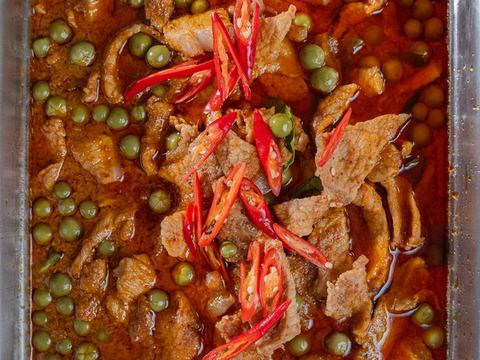
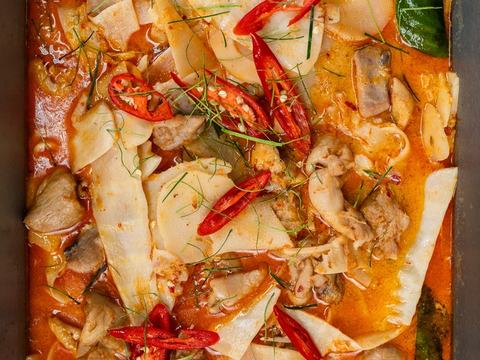
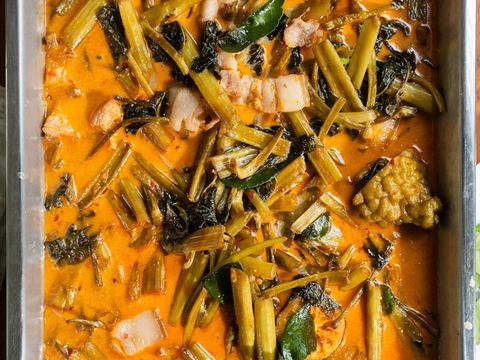
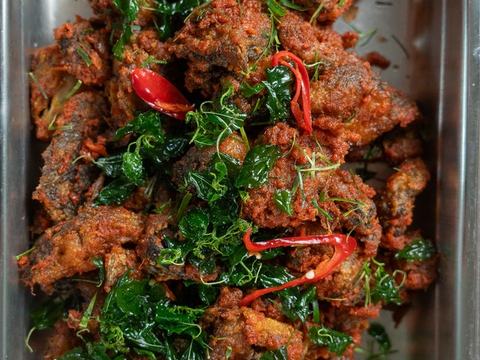
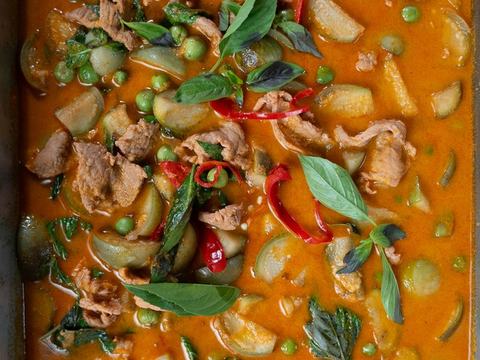
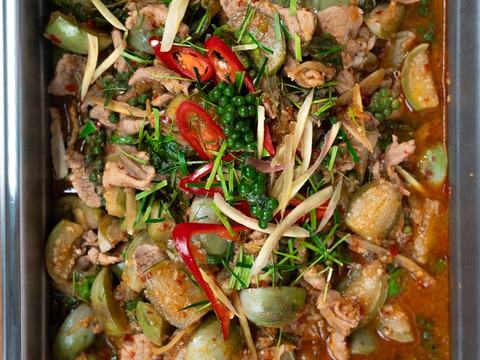
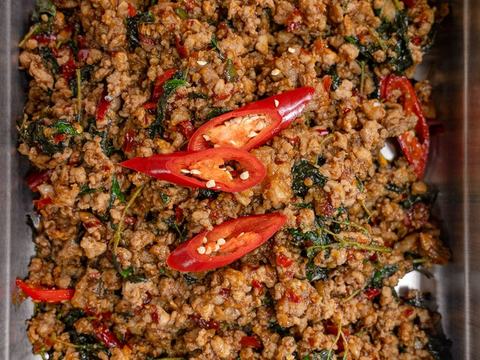
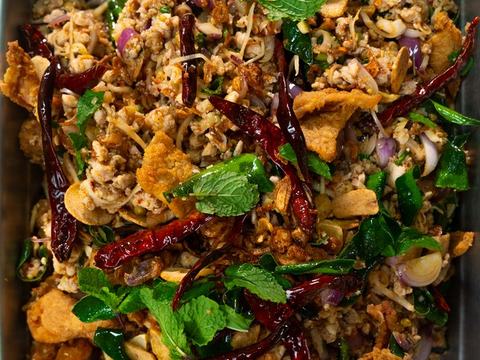
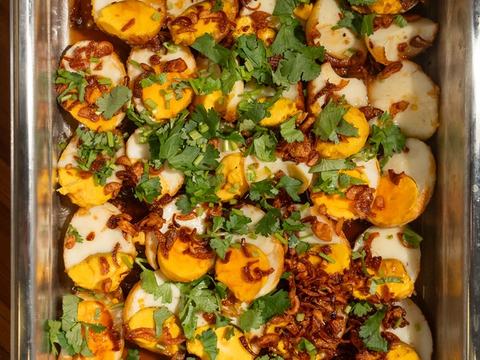
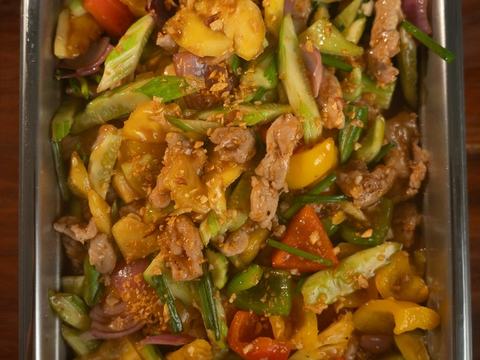
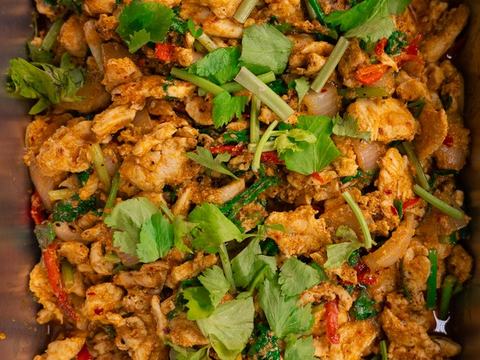
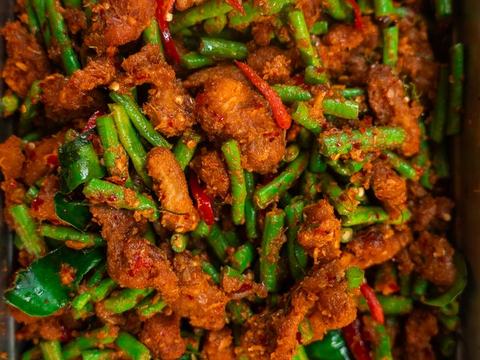
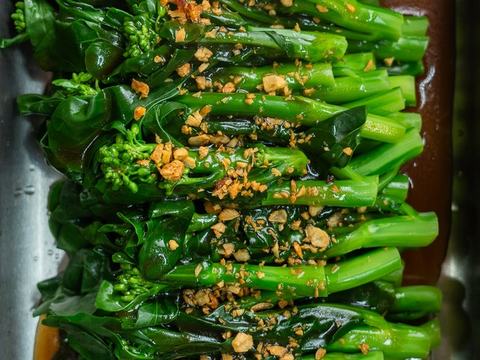
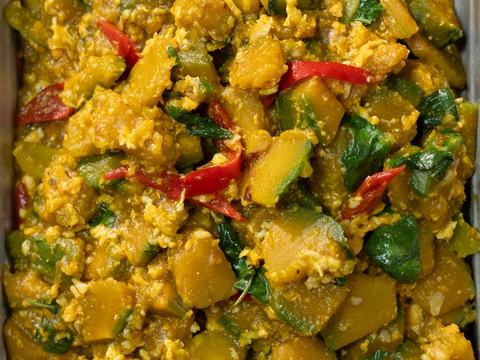
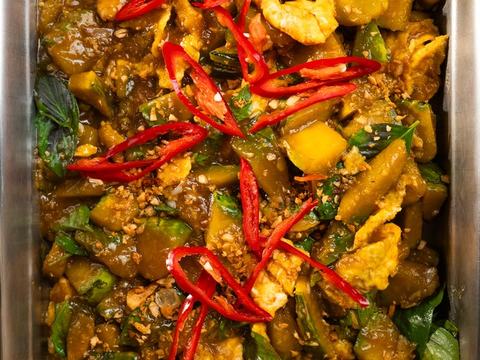
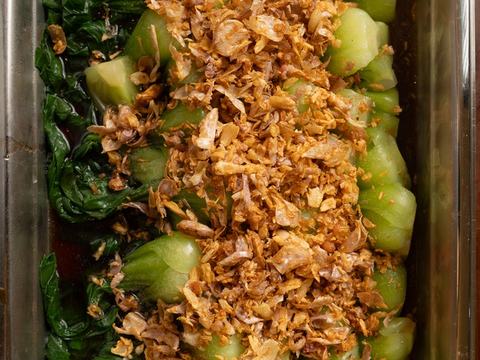
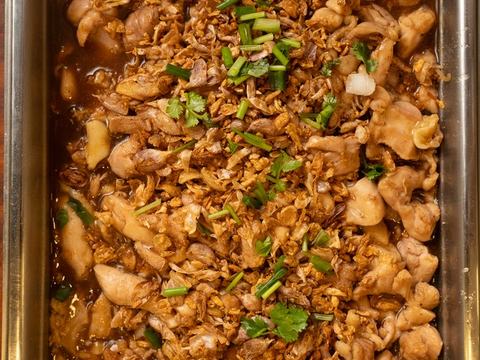
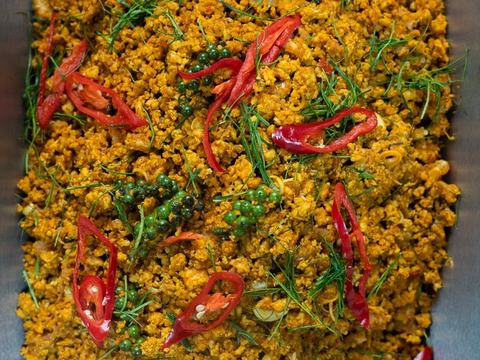
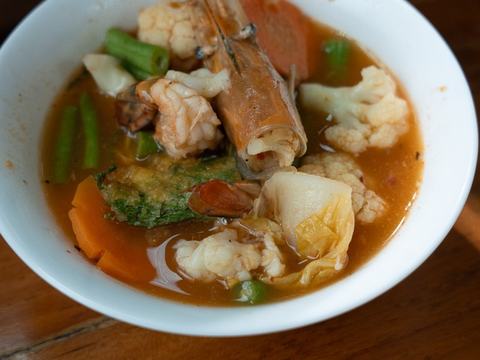
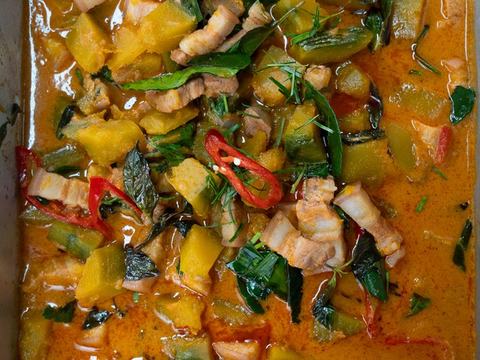
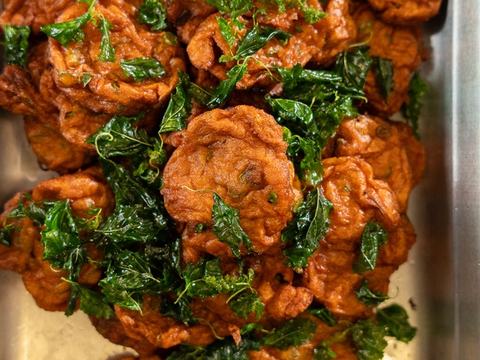
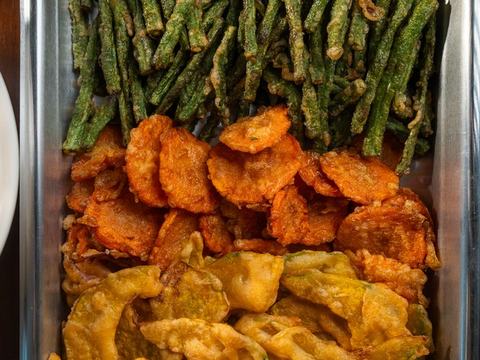
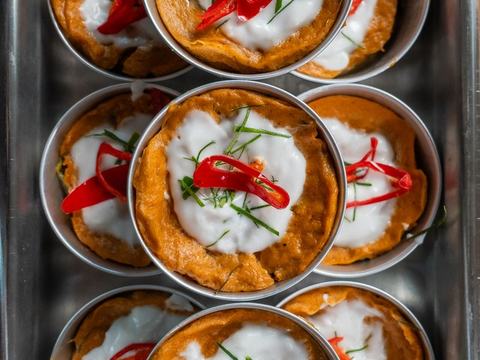
Today’s trays

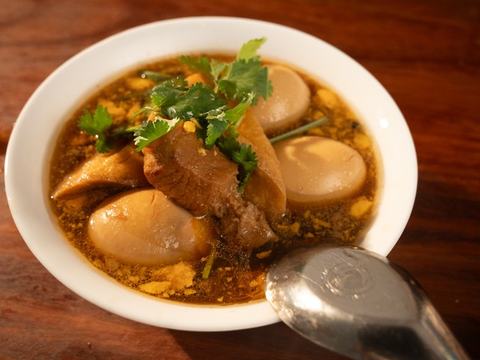
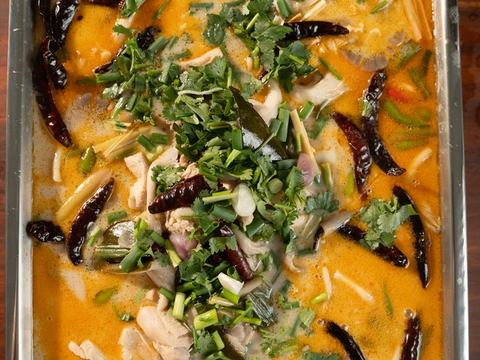
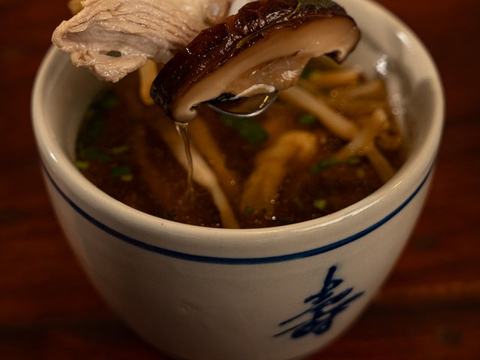
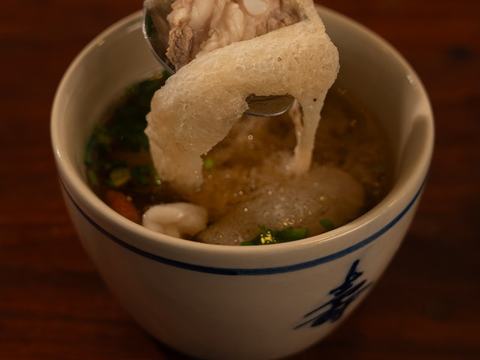
Today’s trays

The trays change every day. The kitchen posts the line-up here, in English and Thai.

Dish names in English are our own translations; heat dots show how hot each dish usually is. Ask at the counter if you’re unsure.

What is khao gaeng

Thailand’s everyday fast food, cooked before dawn.

Khao gaeng (ข้าวแกง) means “rice-curry”, though “curry” here stands for everything on the counter: curries, soups, stir-fries, relishes. Long before food courts, Thai cooks ladled the morning’s pots over rice for people on their way to work; a Bangkok register of 1883 already counted 57 such shops. The format has barely changed since. The cooking happens before dawn, the counter opens with the market, and the trays empty as the morning goes on. There is no menu to read and nothing to wait for. You look, you point, you eat. If you know nasi campur, economy rice or a Japanese teishoku counter, you already know how this works.

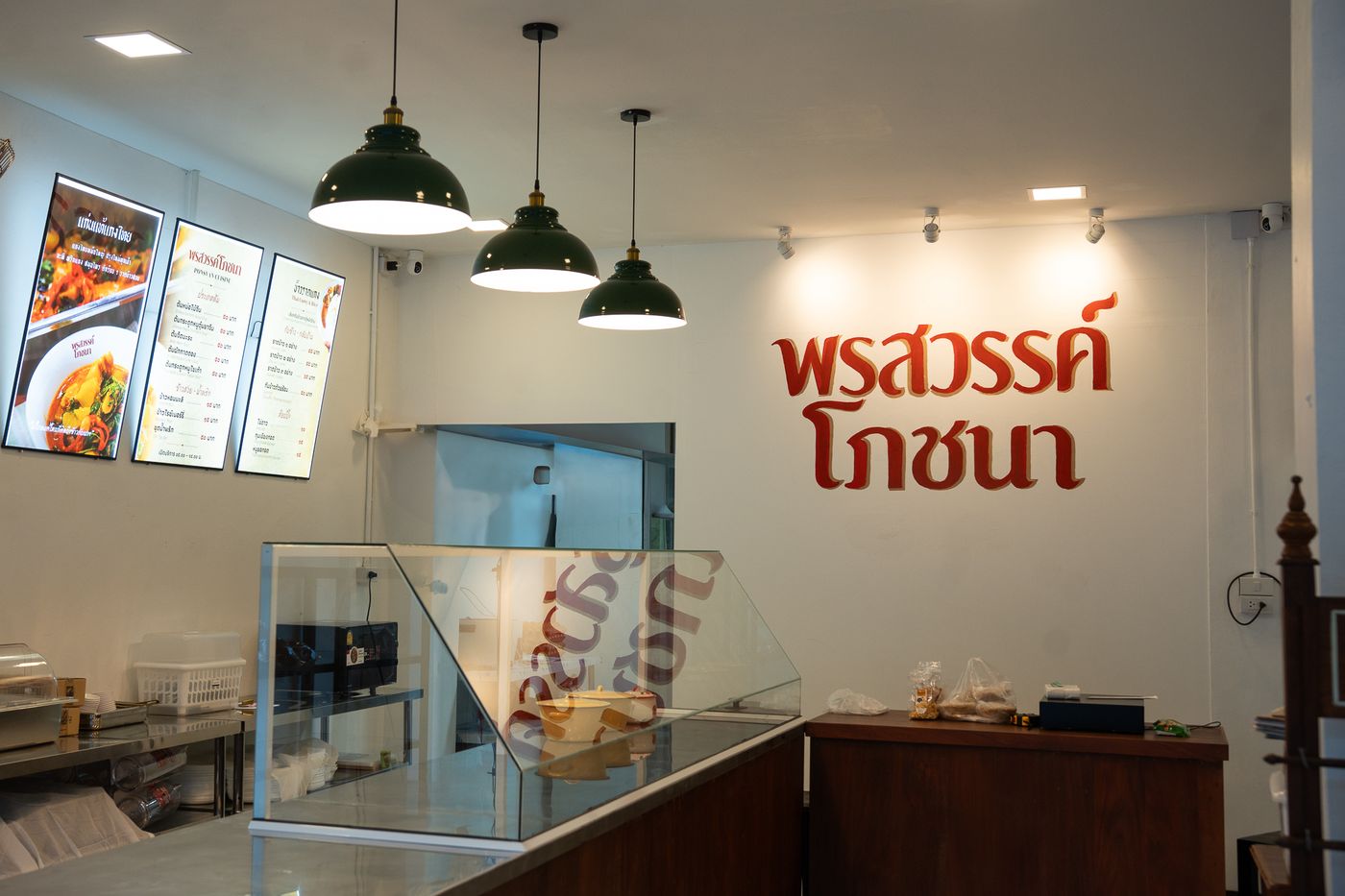
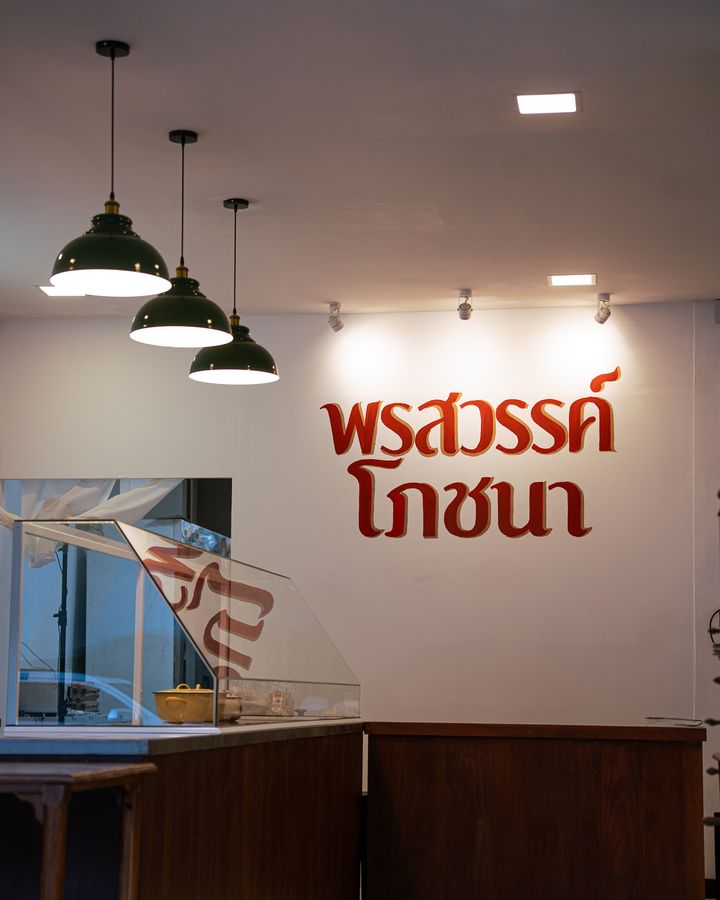
Inside Ponsvan Kitchen: the red sign พรสวรรค์ โภชนา on the back wall, pendant lamps and an illuminated menu board
Inside the shop: the counter, the menu board, and the name on the wall in red.
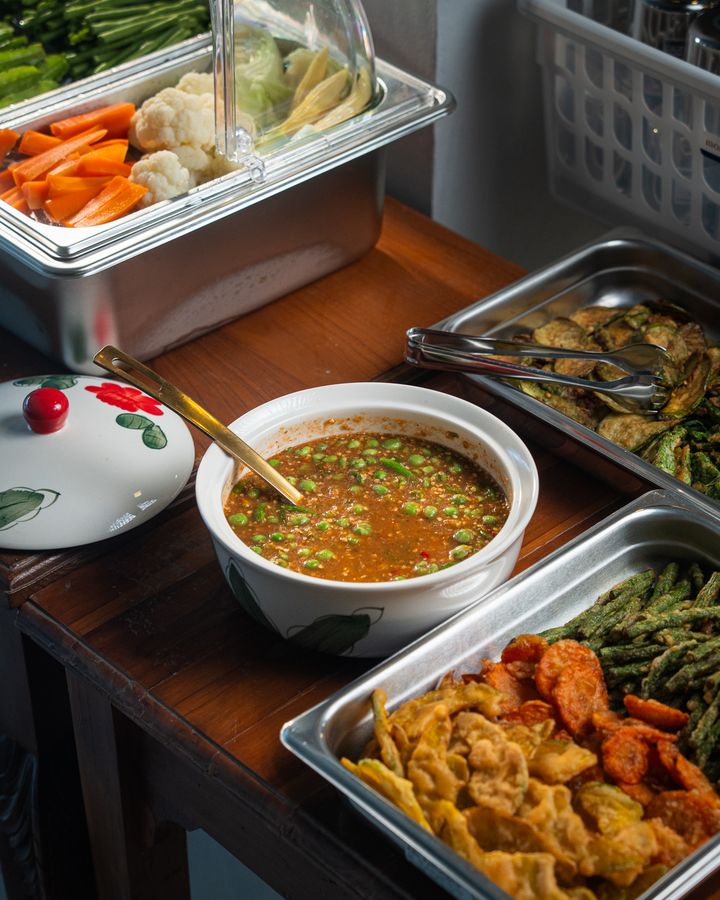
Steel trays of curries and stir-fries on the counter, with a bowl of soup and fresh vegetables

Look at the trays

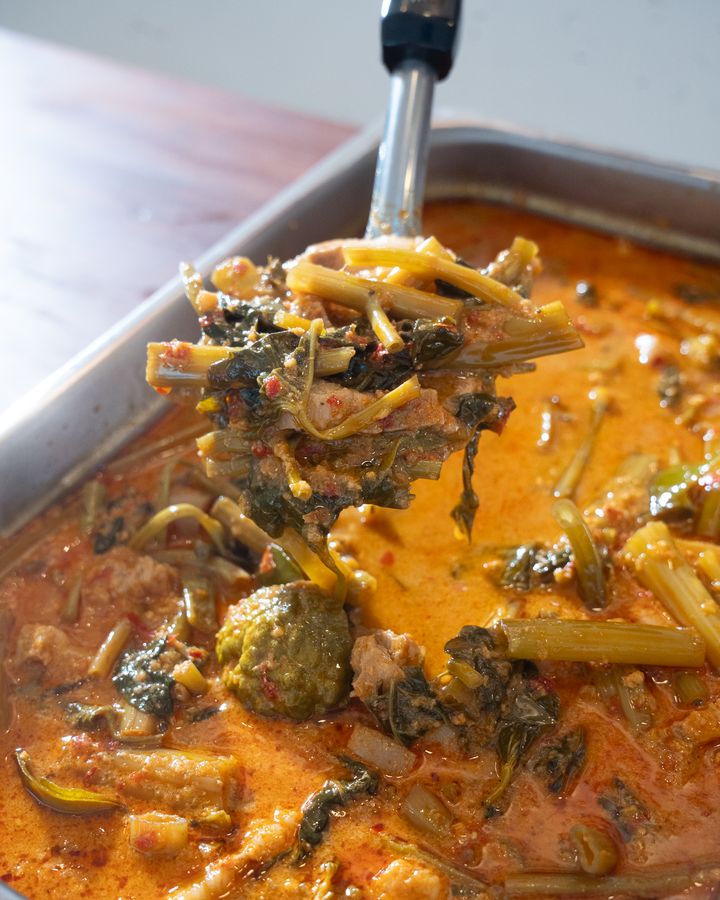
A couple of dozen dishes sit in steel trays and pots along the counter. Check this page first and you’ll know their names before you arrive.

A steel ladle lifting curry out of a tray

Point and count

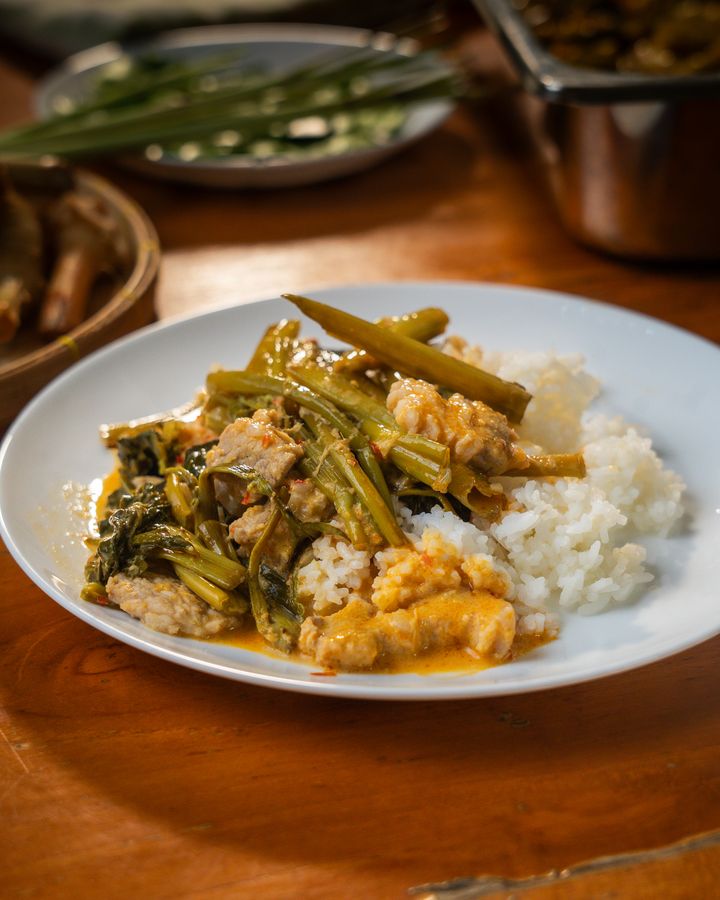
Choose one, two or three dishes. Say raat khao for “on rice” here, or sai thung for “in a bag” to take away. Add a fried egg if you like.

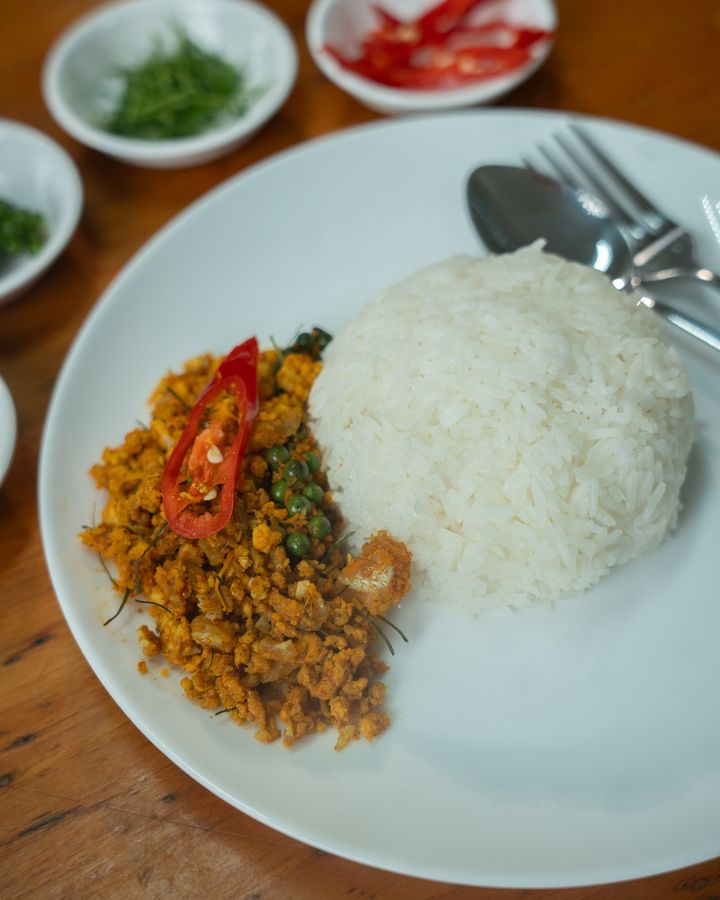
A plate of rice with stir-fry on a wooden table, small dishes of condiments beside it

Sit, eat, pay

Thais eat curry with a spoon in the right hand and a fork in the left; the fork only pushes. Pay at the counter in cash or by PromptPay QR.

Five words that are enough

ao an néeเอาอันนี้“I’ll have this one.” (Point while you say it.)
sŏng yàangสองอย่าง“Two kinds.” Sǎam yàang is three. Hold up fingers and nobody minds.
raat khaoราดข้าว“On rice.” Eat here, on a plate.
sai thungใส่ถุง“In a bag.” Take it away — curries travel well.
mai phetไม่เผ็ด“Not spicy.” We’ll point you to the mild trays; cooked curries can’t be toned down.
khai daoไข่ดาวA fried egg on top. The Thai answer to almost everything.

Our story

แก่นแท้ แกงไทย — the essence of Thai curry.

Ponsvan (พรสวรรค์) is the Thai word for a gift from heaven — the word you use for a person’s natural talent. Pochana (โภชนา) is an old word for food and nourishment. Put together, the name on the sign is a small promise: food made by someone with a gift for it.

The shop is run by a small team from Bueng Sam Phan. Our cook, Ked, plans the trays every evening and has them cooked and on the counter by five. The tagline on our sign is about what never changes: khao gaeng has changed its face in every era, but the heart of a Thai curry is still its spice paste.

กลิ่นเครื่องเรืองรสเร้า เคล้าคลุกเข้าด้วยรสไทยรสมือสื่อรสใจ สร้างแกงไทยคู่รสเรือนกาลเปลี่ยนเวลาหนุน กลิ่นละมุนติดตามเตือนรสแท้มิแลเลื่อน รสทิพย์นี้รสทิพย์ไทย

The scent of the spice paste wakes the flavours, folded through with the taste of Thailand.
A cook’s hand carries the heart’s intent, and makes Thai curry taste of home.
Seasons turn and time moves on; the gentle aroma follows, a reminder.
True flavour does not fade: this heavenly taste is the heavenly taste of Thailand.

Our shop poem, a kap yani 11 (eleven syllables to a line) written for our opening day, 11 November, by Kru Men, a Thai-language teacher. English translation ours.

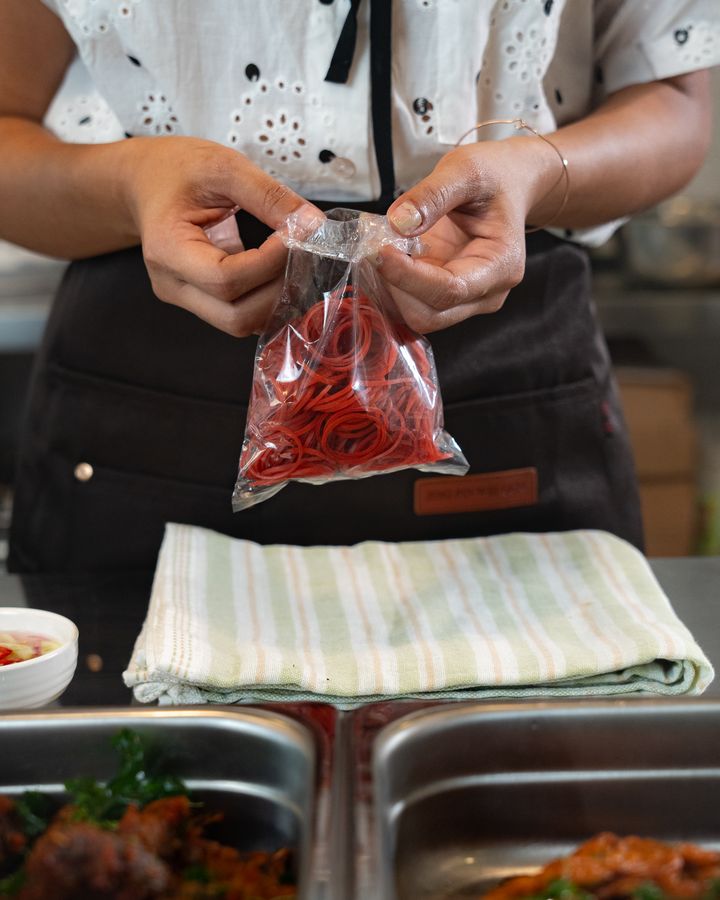
Hands tying a plastic bag of curry shut with a rubber band
Takeaway, the Thai way: curry in a bag, closed with a rubber band.
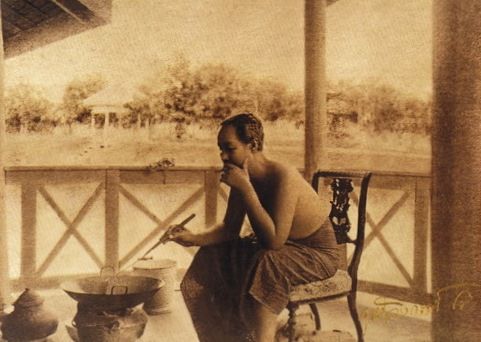
Black-and-white photograph of King Chulalongkorn cooking over a charcoal stove at the Ruean Ton residence
King Chulalongkorn (Rama V) cooking with his own hands at the Ruean Ton residence, Dusit Palace, Bangkok, around 1904–1910. At the house-warming of Ruean Ton the king himself cooked kaeng thepho and lon pla ra; kaeng thepho is still on khao gaeng counters, including ours. Photograph probably by Chao Chom Erb Bunnag; public domain.

A short history of khao gaeng

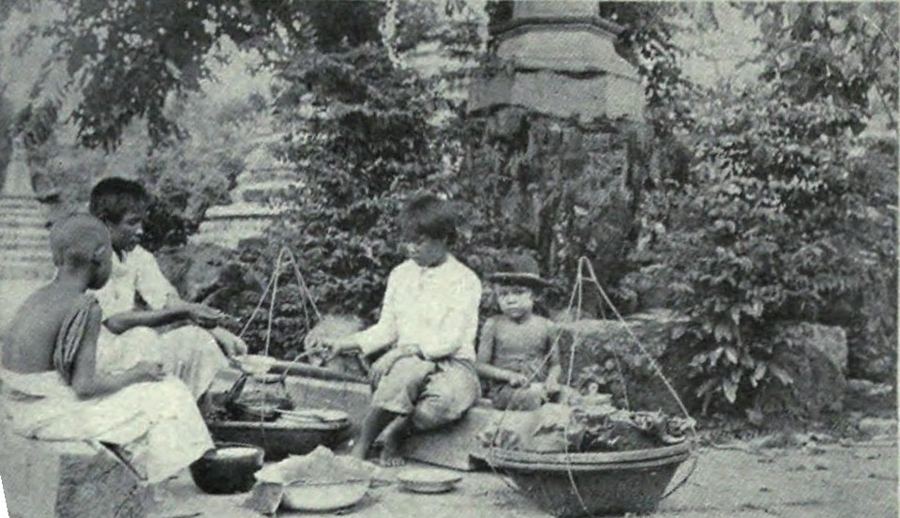
  • 1600s–1700sAyutthaya-era records describe shops near the palace cooking rice and curry for officials, and ready-made khao gaeng sold in the city’s markets.
  • 1883A Bangkok city register counts 57 khao gaeng shops. A famous one sells a full set — curry, stir-fry, relish, vegetables and grilled fish — for one salueng, a quarter of a baht.
  • c. 1890Thailand’s first printed cookbook, Tamra Kap Khao, appears in Bangkok; it opens with massaman curry.
  • 1908Mae Khrua Hua Pa by Thanphuying Plian Phasakorawong is printed — the first Thai cookbook to weigh its ingredients. It calls every curry paste “prik khing”.
  • 2026Ponsvan Kitchen opens in Bueng Sam Phan on 11 November: one more small shop in a story that is more than two hundred years long.
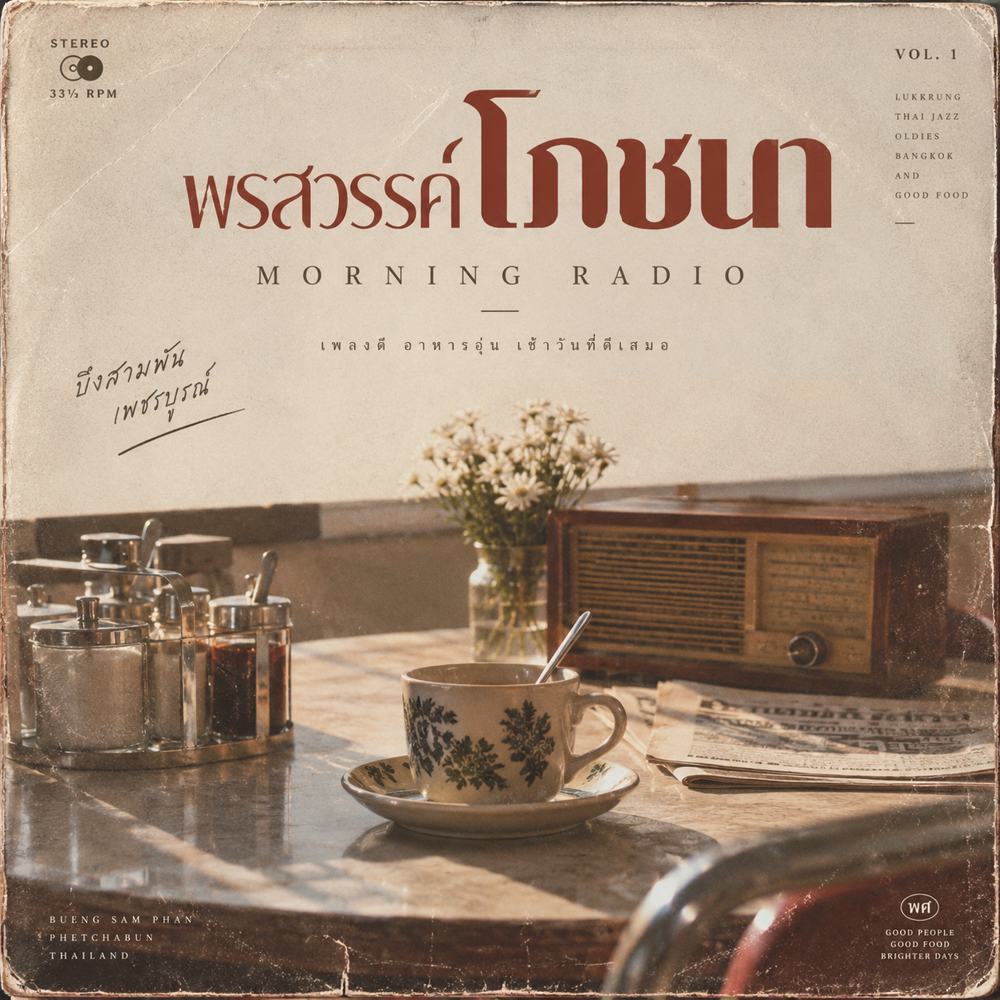
On air · every morning · 05:00

We think of the shop as a small local radio station.

It opens at the same minute every day and broadcasts one thing: a good start to the day. The lights come on at five, the market across the road is already awake, and the first trays go into the counter.

Pornsawan Station · Morning Radio · Bueng Sam Phan

Artwork in the style of a 1970s Thai record sleeve: a cup of coffee, a vintage radio and a newspaper on a café table, titled Pornsawan Pochana Morning Radio

Visit

Opposite the morning market, just off Highway 21.

34 Moo 7, Sap Samo Thot
Bueng Sam Phan, Phetchabun 67160, Thailandพรสวรรค์ โภชนา · 34 หมู่ 7 ต.ซับสมอทอด อ.บึงสามพัน จ.เพชรบูรณ์ 67160

Hours
Every day 05:00–14:00The trays change daily; some dishes sell out before we close.
Find it
In Bueng Sam Phan town, directly opposite the morning market, next to Chanika Studio. Look for the red letters on the cream sign. The Google Maps pin is exact.
Parking
In front of the shop, for cars and motorbikes.
Pay
Thai baht cash or PromptPay QR. No cards.
Inside
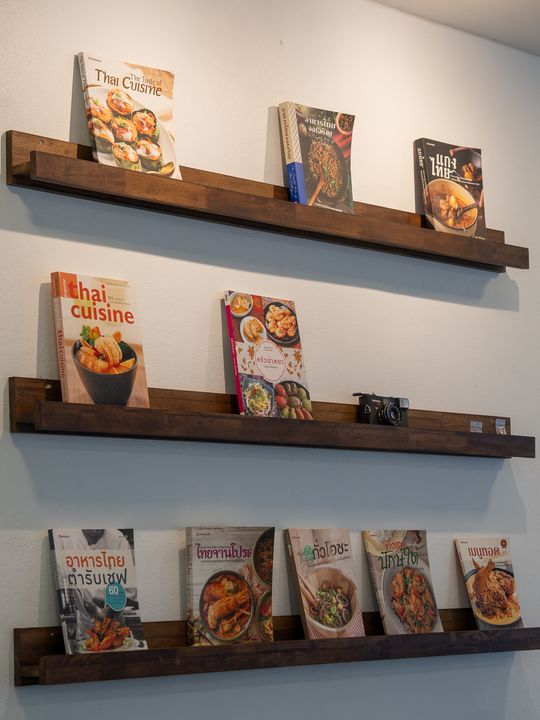
Tables to eat in, a customer restroom, and a wall of old photographs and cookbooks if you want to linger.
Contact
Phone 094 999 2998 · LINE @ponsvan · Facebook Messenger. Message us in Thai or English.
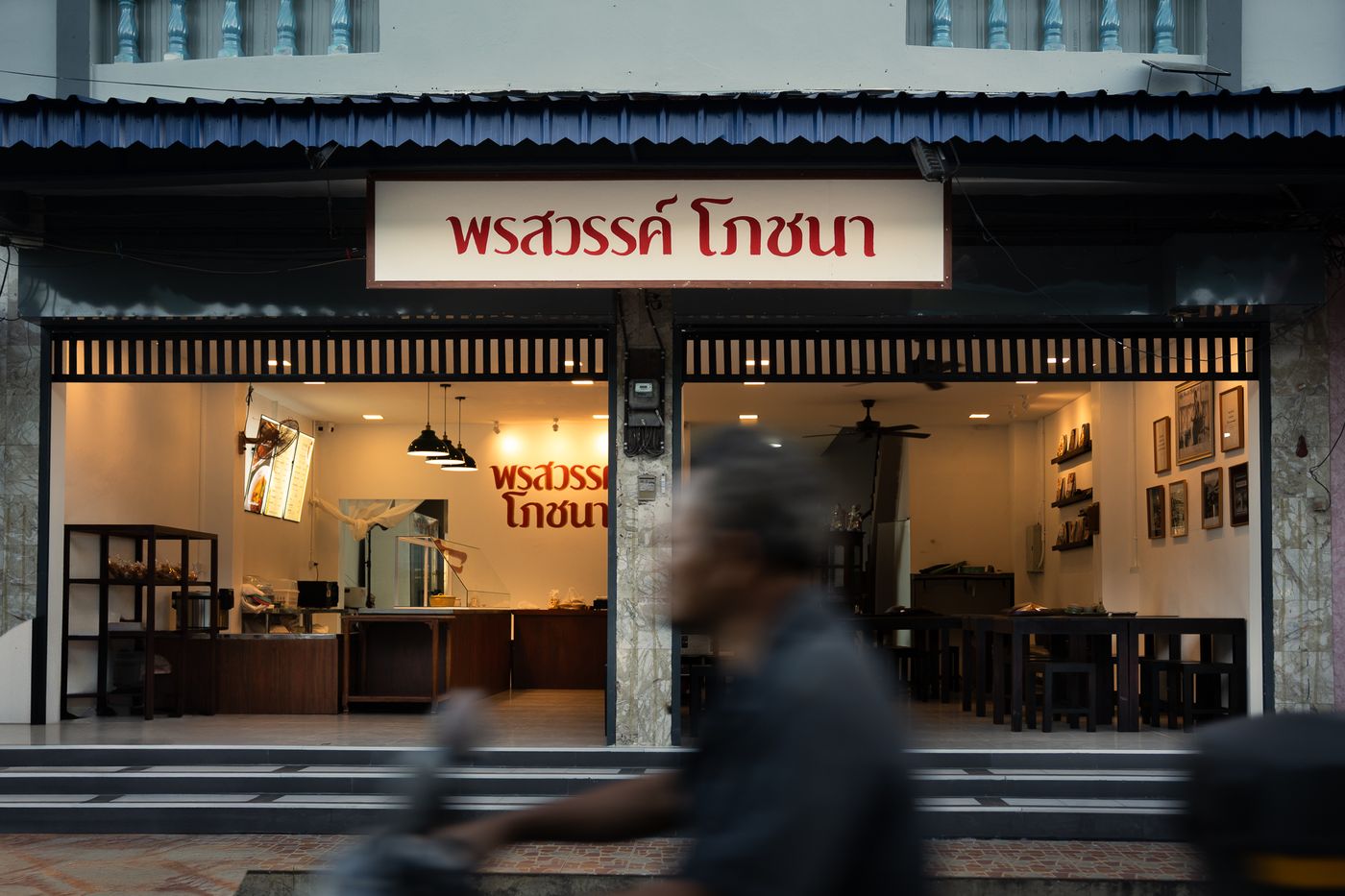
The front of Ponsvan Kitchen from the street: a cream sign reading พรสวรรค์ โภชนา above an open shopfront, with a motorbike passing
The shop from the street. The sign reads พรสวรรค์ โภชนา.

Getting here

  • BangkokAbout 260 km / 4 hours by car via Saraburi and Highway 21 (Chai Badan – Si Thep – Wichian Buri – Bueng Sam Phan). Phet Tour buses from Mo Chit stop at Sap Samo Thot (Bueng Sam Phan), and buses to Phetchabun or Lom Sak pass through town.
  • Si ThepSi Thep Historical Park is about an hour south. Breakfast here, then the ancient city before the heat.
  • Khao KhoAbout 2 h 15 north. Bueng Sam Phan is one of the last proper towns before the valley narrows and the road climbs.
  • By trainNo railway reaches Phetchabun. The nearest station is Lam Narai (Chai Badan, Lopburi), about 1 h 15 south; buses from there run up Highway 21 past our town.
  • By airPhetchabun’s airport has no scheduled flights. Fly to Phitsanulok and drive about 3 hours, or drive from Bangkok.

Ride-hailing and taxis are scarce in Bueng Sam Phan. Come by car, motorbike, or by bus along Highway 21. Bring cash or a Thai banking app.

Explore Phetchabun from here

A breakfast stop between the ancient city and the mountains.

Phetchabun is a long valley between two ranges, famous in Thailand for sweet tamarind, cool-season fog and a UNESCO World Heritage city that most foreign visitors have never heard of. Bueng Sam Phan sits on the valley’s main road. Drive times below are estimates from the shop.

  • 10 min · in town

    Bueng Sam Phan lake

    The lake that named the district. Old-timers say it once held three thousand crocodiles; today it holds fishermen, lakeside fish restaurants and a long-boat race every November.

  • 15 min north

    Muay Thai Battle Conquer

    Training at the camp in Nong Chaeng? We are a short scooter ride away. Rest-day breakfast, a bag of curry for the dorm, and a change from camp food.

  • 25 min south

    Wichian Buri grilled chicken

    The district next door is known across Thailand for kai yang Wichian Buri: village chicken marinated overnight and grilled slowly over charcoal. Lunch, after breakfast with us.

  • 1 h south

    Si Thep Historical Park

    UNESCO World Heritage since 2023: a moated Dvaravati-era city with the great Khao Klang Nok stupa and Khmer-style prangs, in open country. Go early; there is little shade, and little English signage, so read up first.

  • 1 h 15 north

    Phetchabun town

    The provincial capital on the Pa Sak river: Wat Mahathat, Wat Trai Phum and its river-rescued Buddha, and the sweet-tamarind orchards that give the province its nickname.

  • 2 h 15 north

    Khao Kho

    Thailand’s “Little Switzerland”: hill-top temples, a ridge of wind turbines, strawberry and coffee farms and a sea of mist at dawn in the cool season (November–February). You need your own wheels.

  • 2 h 30 north

    Wat Phra That Pha Son Kaew

    A hilltop temple covered in millions of mosaic tiles and pottery shards, with five nested white Buddhas looking over the valley. The most photographed place in the province.

  • 3 h north

    Phu Thap Boek

    Phetchabun’s highest point, a Hmong village, cabbage terraces and campsites above the clouds. Near-freezing nights in December; bring a jacket.

  • Any morning

    The market across the road

    Bueng Sam Phan’s morning market runs from before dawn: vegetables from the surrounding farms, river fish, sweets wrapped in banana leaf. Cross over after breakfast.

Questions travellers ask

Before you come

What is khao gaeng?

Khao gaeng (ข้าวแกง, literally “rice-curry”) is Thailand’s everyday curry counter: a row of trays filled with curries, soups and stir-fries cooked that morning. You point to one, two or three dishes, they are ladled over a plate of rice, and you eat right away or take it home in a bag. It is how Thais eat before work.

Do I need to speak Thai?

No. Point to the trays you want and hold up fingers for how many. This website lists the day’s trays in English, so you can choose before you arrive. “Raat khao” means on rice; “sai thung” means in a bag.

How much does a plate cost?

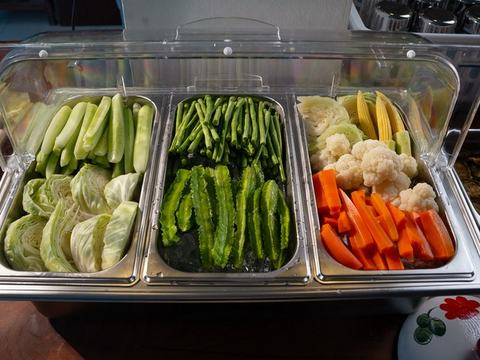
Rice with one dish is ฿45, two dishes ฿55, three dishes ฿65. A dish to take away in a bag is ฿50 (without rice). A fried egg is ฿10. Clear broth, drinking water and fresh vegetables are free with every plate.

What are the opening hours?

Every day, 05:00 to 14:00. The trays change daily and some dishes sell out before we close.

How do I know what is cooking today?

The kitchen posts the day’s line-up on this page, usually the evening before, with English names. You can also message us on LINE (@ponsvan).

How spicy is the food?

Some trays are hot, because that is the dish. Massaman, panang, five-spice eggs (palo), tom kha, the clear soups and braises, sweet and sour, garlic chicken and pumpkin with egg are mild or chili-free. Green, red and sour curries have real heat; jungle curry, holy basil stir-fries, khua kling, pad cha and shrimp-paste chili relish are hot. A cooked curry can’t be made milder per plate, but we can point you to a milder tray, and a fried egg and plain rice calm anything.

Is there anything vegetarian, vegan or halal?

Most Thai curries contain shrimp paste or fish sauce, and pork, chicken and fish are cooked in one kitchen, so we cannot guarantee vegetarian, vegan or halal meals. Ask which trays are meat-free that morning; pumpkin with egg and the vegetable stir-fries are the usual candidates. Plain rice and a fried egg are always possible.

What about allergies?

Peanuts appear in massaman and panang. Shrimp paste, dried shrimp and fish sauce are in most curries and relishes. Soy and oyster sauce appear in many stir-fries. Tell us what you cannot eat and we will tell you which trays to avoid; we cannot promise a kitchen free of any ingredient.

Where is Ponsvan Kitchen?

34 Moo 7, Sap Samo Thot, Bueng Sam Phan, Phetchabun 67160, Thailand — opposite the morning market in Bueng Sam Phan town, next to Chanika Studio, just off Highway 21 (the Saraburi–Lom Sak road). About an hour north of Si Thep Historical Park, 2 hours 15 minutes south of Khao Kho, and around 4 hours by car from Bangkok.

Is there parking and a restroom?

Yes. Parking in front of the shop for cars and motorbikes, and a customer restroom.

Can I pay by card?

Thai baht cash or PromptPay QR only; no cards. PromptPay works with every Thai bank app and with some international QR wallets.

Can I take food away, or order for a group?

Yes. Any dish can be bagged to go — ฿50 a dish without rice, or ฿5 more in a box. For a large group or a big order, call 094 999 2998 or message us on LINE a day ahead.

Is it a good stop on the road to Khao Kho or Si Thep?

Yes. Bueng Sam Phan sits on Highway 21 between Bangkok and the mountains, about an hour north of Si Thep. Breakfast with us, then the ancient city, or push on north to Khao Kho. Curries travel well in a bag for the drive.

Can I photograph the trays?

Please do. Ask before photographing other customers.

Why “khao gaeng” and not “curry restaurant”?

Because it is a different thing. A restaurant cooks after you order; a khao gaeng house cooks before you arrive and sells until it runs out. That is why it is fast, cheap and honest: you see exactly what you are getting. We would rather teach the word than lose the idea.